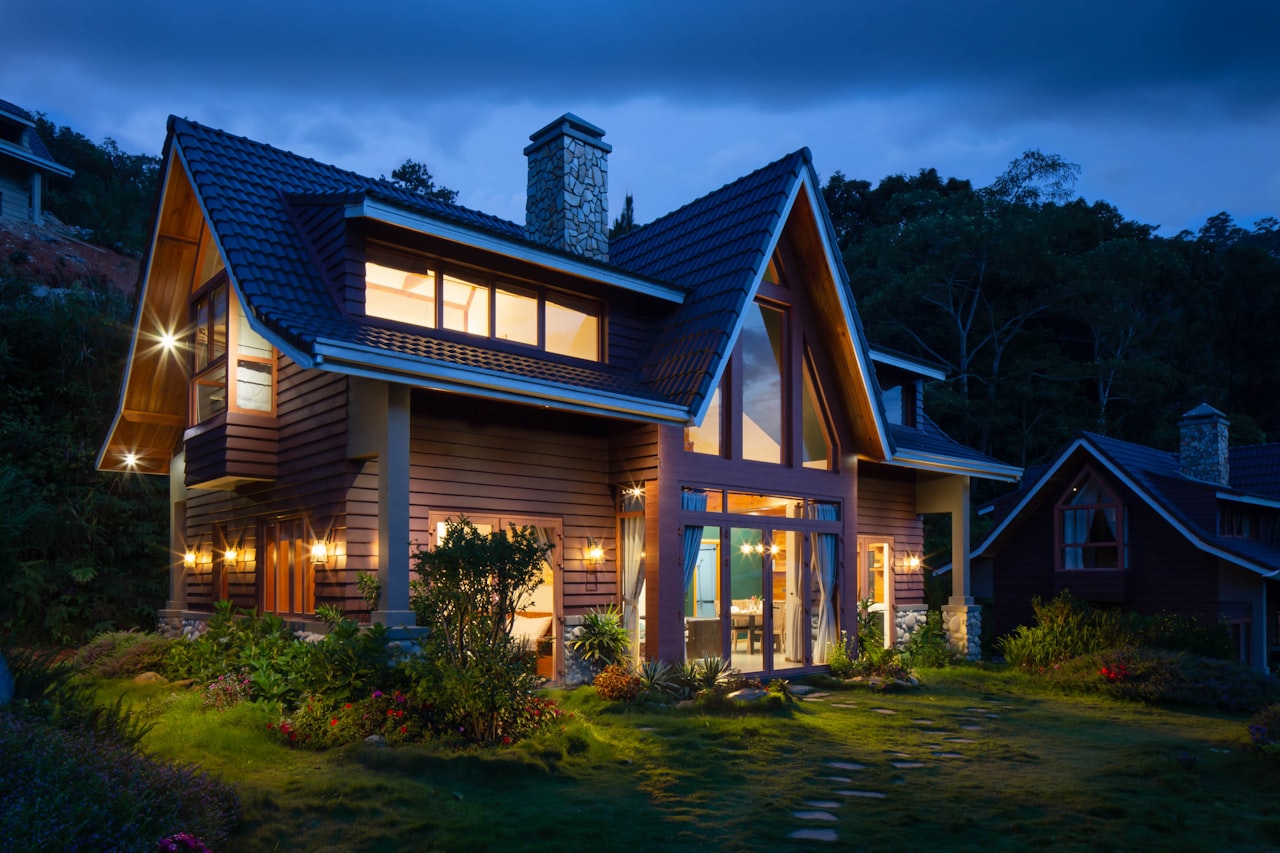
New Buffalo
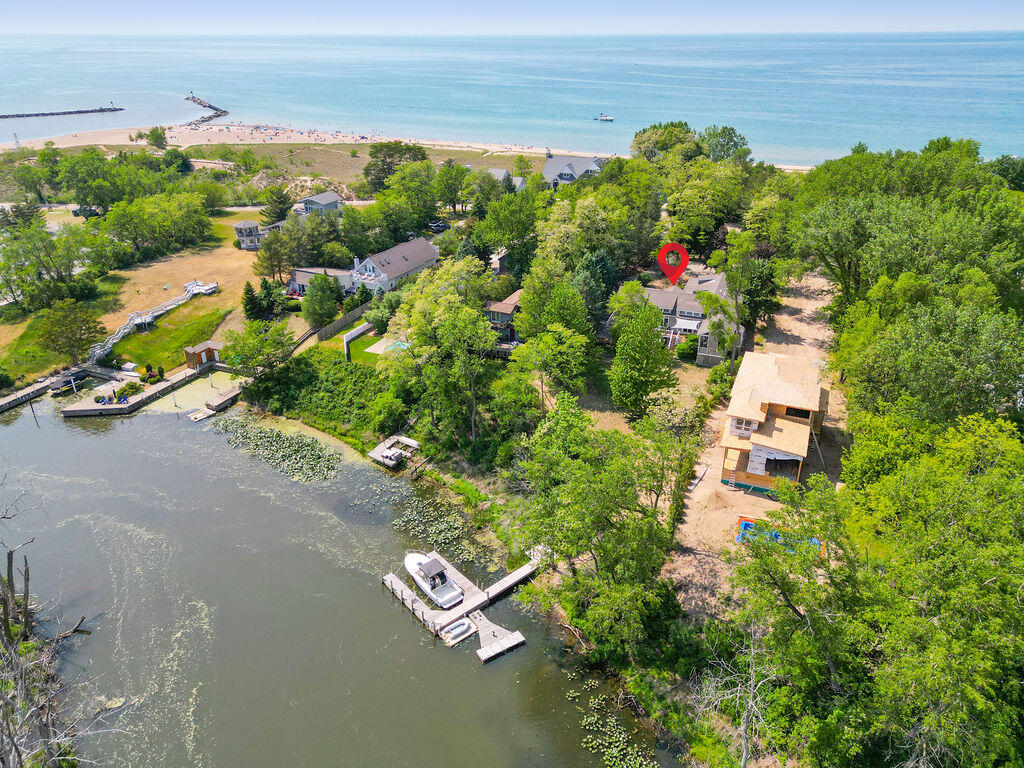
Home to the largest public beach and harbor in the area.
Home to the largest public beach and harbor in the area.
1,306 people live in New Buffalo, where the median age is 53.8 and the average individual income is $53,185. Data provided by the U.S. Census Bureau.
Total Population
Median Age
Population Density Population Density This is the number of people per square mile in a neighborhood.
Average individual Income
New Buffalo is a small lakefront city at the mouth of the Galien River, and it functions as the front door to Harbor Country — the string of coastal communities running north along Lake Michigan's eastern shore. Roughly 1,700 to 2,000 people live here year-round, but that number tops 15,000 in the height of summer. Understanding that split is the key to understanding the town, the housing stock, and the market.
What draws buyers is a rare combination: a wide public beach, a genuinely active harbor, a walkable downtown with real restaurants and shops, and a 75-to-90-minute drive from downtown Chicago. What surprises them is how different the town feels in February versus July, and how much the property tax structure changes the math on a second home. Both are covered below.
This guide is written for buyers who want the full picture before they start touring — the geography, the neighborhoods, the price bands, and the practical details that don't show up in listing photos.
New Buffalo sits in the extreme southwestern corner of Michigan, in Berrien County, directly against the Indiana state line. It's about 70 miles from downtown Chicago.
By car, the drive runs 75 to 90 minutes in light traffic via I-90/I-94 East. New Buffalo is at Exit 1 — the first Michigan exit after you cross out of Indiana, which is a meaningful convenience for weekenders. US-12 also runs through town. One detail that catches new buyers off guard: crossing the state line moves you from Central to Eastern Time, so you lose an hour heading east.
Rail access is unusually good for a town this size. New Buffalo has its own Amtrak station downtown, blocks from the beach, served by the Wolverine and Blue Water lines with direct service into Chicago's Union Station. The South Shore Line commuter rail doesn't stop in New Buffalo itself, but its nearest stations sit in Michigan City, Indiana — roughly 10 to 12 miles away — giving you a low-cost commuter option into Chicago. For buyers weighing a car-optional weekend, that combination is a real advantage over towns further up the shore.
New Buffalo was platted in the 1830s by W.L. Whittaker and Nelson Chittenden around the mouth of the Galien River. The natural deep-water harbor was the whole point — early boosters genuinely expected the town to compete with Chicago as a shipping and timber port on Lake Michigan.
That ambition didn't pan out, but the Michigan Central Railroad arrived in 1849 and made New Buffalo a rail-to-steamer transfer point, permanently tying the town's economy to Chicago. When industry moved elsewhere, the rail connection stayed — and that's what set up the second act.
Through the 1920s and after, the automobile and US-12 brought Chicagoans east in search of sand and cooler air. Cottages, family resorts, and beach clubs replaced working docks. The final shift came in the 1990s and 2000s, when harbor expansion and downtown redevelopment turned a summer-only resort into a year-round destination with a serious luxury second-home market.
You can still read this history in the housing stock. A 1930s cottage three blocks from the beach and a 2022 glass-and-stone lakefront build are both products of the same 190-year arc.
The city is small, but the differences between areas are sharp — in price, in lifestyle, and in who ends up buying there.
Lakefront and Marina District. Directly along Lake Michigan, the Galien River channel, and the harbor. This is where the money concentrates: high-end condos, gated waterfront communities like The Moorings, and custom lakefront estates. Buyers here are paying for walkability to the beach, proximity to boat slips, and west-facing sunsets over the water.
In-Town (Downtown Core). The historic grid around Whittaker Street. The mix runs from 1920s beach bungalows and restored Victorians to modern infill construction. This is the most walkable part of the region — coffee, dinner, the Amtrak platform, and the beach are all on foot. It's popular with full-time residents and is also the strongest short-term rental territory.
New Buffalo Township. The area encircling the city proper. Quieter, more wooded, larger lots, inland subdivisions and newer builds. Property taxes run lower than in the city, which makes the township the practical choice for many full-time buyers who want space without the resort premium.
Grand Beach and the Michiana Edge. Just southwest along the Indiana border. Grand Beach is a historic village enclave — the white entrance arch, private beaches, golf carts instead of cars, and heavily wooded lots holding century-old summer homes. It's secluded in a way that in-town New Buffalo is not, and it trades walkability for privacy.
The housing stock breaks into four recognizable types, and knowing which one you're touring tells you most of what you need to know about price, maintenance, and resale.
Vintage beach cottages were built between the 1920s and 1960s: compact footprints, screened porches, cedar shake or lap siding, stone fireplaces. They're concentrated in the in-town grid and the wooded pockets near Grand Beach. Many have been thoughtfully updated. Others are, realistically, teardown candidates on valuable lots — and pricing them correctly requires knowing which is which.
Modern lakefront and dune builds dominate the shoreline. Contemporary and Shingle-style customs designed around the view: floor-to-ceiling glass, native stone, expansive decking, private beach access. These are the properties that set the ceiling for the market.
Condos along the channel and harbor — The Moorings and Harbor Grand areas among them — are built for boaters and weekenders. Dedicated slips, community pools, and lock-and-leave simplicity. If you're here 20 weekends a year and want a boat, this is usually the most rational purchase.
Second-home estates sit slightly inland, often in the township or gated enclaves. Larger lots, guest houses, pools — space that isn't available closer to the water at any reasonable price.
Price bands, as a working guide:
Segment | Typical Range |
|---|---|
Township starter homes, older condos | $350,000 – $500,000 |
In-town single-family | $650,000 – $900,000 |
Waterfront, luxury new builds, Grand Beach estates | $1.5M – $5M+ |
The market moves on a resort cadence rather than a metro one. Listing activity peaks in spring and early summer, when sellers want to catch buyers who hope to close before the season starts. Inventory thins sharply from November through February. That off-season lull is where prepared buyers often do best — competition drops, and sellers who've carried a property through a quiet winter tend to be more flexible.
The property tax detail that matters most. Michigan's Principal Residence Exemption (PRE) exempts full-time residents from up to 18 mills of local school operating taxes on their primary home. Second homes, vacation properties, and rentals do not qualify. Non-homestead owners commonly pay 35% to 50% more in annual property tax than a primary resident would on an identical house.
For a buyer comparing New Buffalo to markets without this structure, that's not a rounding error — it's a line item that belongs in your carrying-cost model before you make an offer. We run those numbers with clients on specific properties, because the gap between the two rates changes what "affordable" means at every price point.
Browse Real Estate in New Buffalo
New Buffalo Beach and Lakefront Park sits at the north end of Whittaker Street and is the primary public beach for the region: over 800 feet of wide sand, a dune boardwalk, playground, restrooms, seasonal concessions, and lifeguards in season. Parking is paid during peak months via kiosks and mobile apps.
Adjoining it, the mouth of the Galien River offers soft-water launch points for kayaks, paddleboards, and small craft directly into the lake.
Everything else requires attention. Most of the shoreline outside the public strip is privately held. Many homes and subdivisions set back from the water carry deeded beach access — but the form of that right varies enormously. Some access is held jointly through an association with its own rules and assessments; some is tied explicitly to the individual deed. Public access along the dune line elsewhere is limited and should not be assumed.
If you're buying anywhere outside the immediate downtown core, verifying exactly what beach rights convey with the property is one of the first things worth confirming. It's a frequent source of surprise, and it materially affects value.
The harbor complex is one of the most active recreational boating hubs on Lake Michigan, and for a meaningful share of buyers it's the reason they're here at all.
The city-operated municipal marina sits on the west side of the main river channel and provides 32 transient slips with power, water, pump-out, and a modern bathhouse for boaters running the lake. Counting private marinas — Oselka Snug Harbor among them — and condo associations, the harbor holds over 900 slips, ranging from 25 feet to over 50. Slips are either rented seasonally or deeded to specific waterfront residential units, and a deeded slip is a genuine asset that travels with the property.
The public boat launch on Marquette Drive has eight ramps with direct channel access to Lake Michigan. Trailer parking requires a daily fee or seasonal pass.
Inland, the Galien River Water Trail runs about six miles through marsh and wetland preserve. Low current, quiet, and a completely different experience from open-lake boating — worth knowing about if your idea of a good morning involves a kayak rather than a wake.
Galien River County Park, just northeast of downtown off Red Arrow Highway, is the local standout. Its 86 acres center on the Galien River marsh, and the signature feature is a 300-foot canopy walkway suspended in the treetops leading to a 60-foot marsh overlook tower. A 600-foot barrier-free boardwalk runs down to a river viewing and fishing platform. Note that pets are not permitted, which surprises visitors.
Warren Dunes State Park is 12 miles north via Red Arrow Highway — 1,950 acres, three miles of shoreline, six miles of hiking trails, and dunes rising more than 240 feet above the lake. It has pet-friendly beach sections and the steep dune climbs the region is known for.
Chikaming Open Lands manages several preserves scattered through the area, including the Louis J. Sima Great Lakes Marsh Preserve and Robinson Woods. These are quiet, low-traffic hiking loops through hardwood forest, ravines, and protected wetland — the places locals go when the beach is full.
Whittaker Street runs from US-12 straight to the harbor and holds most of the town's commercial life.
On the dining side, The Stray Dog Bar & Grill at the end of Whittaker is the local anchor, known for its rooftop deck over the harbor. Brewster's Italian Cafe and Casey's Bar & Grill cover cozier indoor and patio dining in town, and the walk between downtown and the beach is lined with ice cream parlors, snack shacks, and casual shore eats.
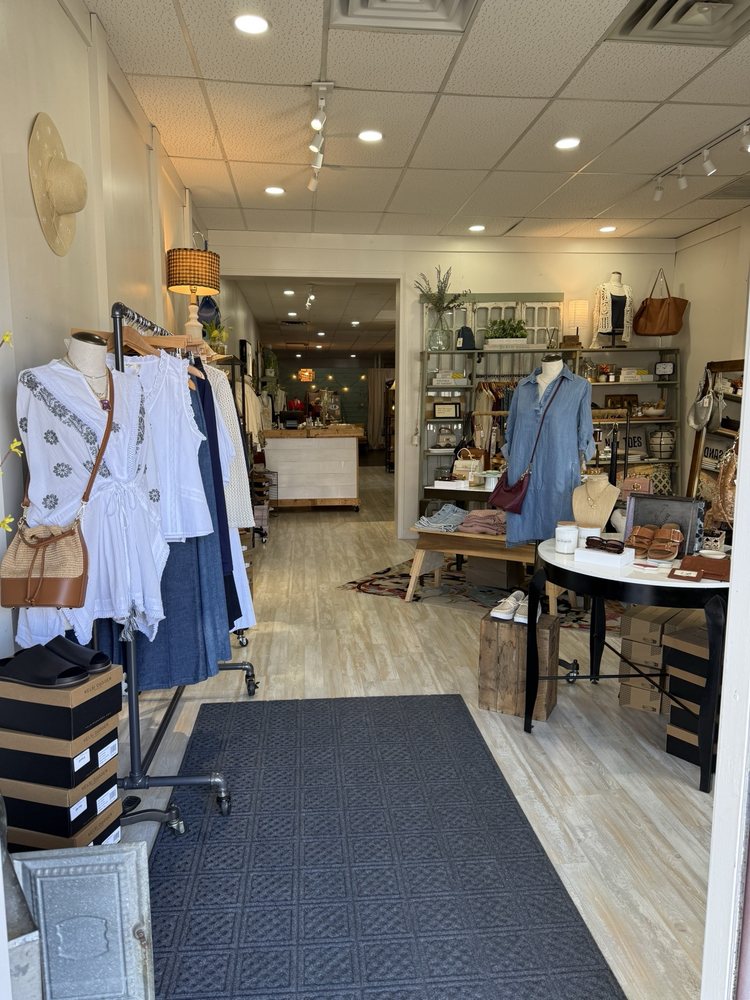
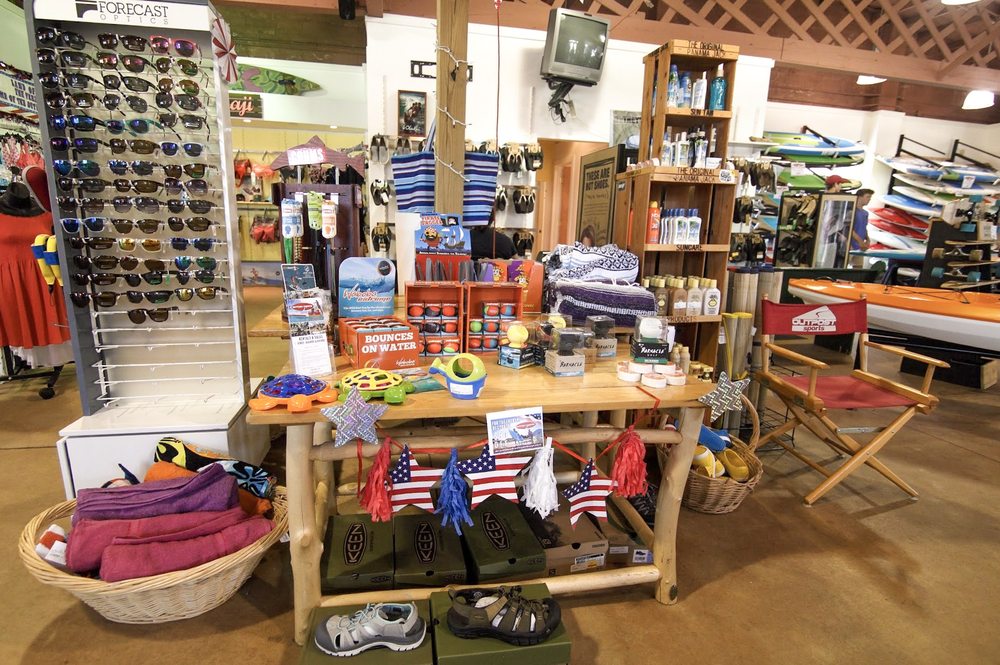
Shopping is almost entirely independent: resort-wear boutiques, coastal home decor, artisan bakeries, gourmet specialty markets, and beach gear outfitters. There is no chain corridor here, which is a deliberate part of the town's character.
Nightlife in town means pub patios, live music at local taverns, and sunset cocktails. For anything larger, Four Winds Casino Resort in New Buffalo Township offers gaming, a concert venue, and multiple restaurants, and it operates year-round — which is a bigger deal in January than it sounds in July.
New Buffalo anchors the southern end of the Lake Michigan Shore AVA. Glacial moraine soils, a relatively southern latitude, and the lake's moderating effect create a microclimate that supports serious viticulture — the region accounts for close to half of Michigan's total vineyard acreage.
The area produces dry whites including Riesling, Pinot Grigio, and Chardonnay, alongside fuller reds like Cabernet Franc, Merlot, and Syrah. Tabor Hill Winery, Lemon Creek Winery, Domaine Berrien Cellars, and Hickory Creek Winery are all within a short drive, and St. Julian operates a tasting room closer to town.
For beer, downtown has Beer Church Brewing Co., housed in a converted historic church, and Ghost Isle Brewery, which pairs wetland views with hazy IPAs. Seven miles inland in Three Oaks, Journeyman Distillery runs a grain-to-glass organic operation out of a 19th-century corset factory, with tours and tastings.
This is the section most buyers skip and later wish they hadn't.
Summer (Memorial Day to Labor Day) is the town at full volume. Population climbs from under 2,000 to north of 15,000. Highs sit in the high 70s to low 80s. Beaches fill, the harbor is busy, outdoor dining runs late — and so do the wait times, and the traffic on Whittaker.
Fall (September to November) is what long-time residents will tell you is the best season. The crowds go home, the lake stays warm well into September, the dunes turn, and vineyards and orchards run harvest events. If you're touring homes, fall shows you a version of the town you'll actually live in.
Winter (December to March) is quiet. Lake-effect snow is the defining feature — cold air crossing warm water produces localized, heavy snowfall that varies dramatically over short distances. Temperatures run into the 20s. Some seasonal businesses reduce hours or close, though the core restaurants, shops, and casino stay open. If you're considering full-time residency, visit in February before you decide.
Spring (April to May) brings temperatures into the 50s and 60s, ice off the lake, marinas prepping slips, and the town gearing back up.
New Buffalo Area Schools is the local public district, serving students from New Buffalo, Grand Beach, Michiana, and the surrounding township.
Inland areas and neighboring Chikaming Township fall under River Valley School District, centered in Three Oaks.
There are no large private schools inside New Buffalo proper, but several regional options sit within a 15- to 25-minute drive: Notre Dame Catholic School (K–8) and Marquette Catholic High School, both in Michigan City, Indiana, and Trinity Lutheran School (Pre-K–8) in Sawyer, north along Red Arrow Highway.
Because district boundaries here cross township lines and don't always follow intuition, confirm the assigned school for a specific address rather than the general area.
New Buffalo is the commercial hub for Harbor Country, a string of distinct communities along and near the shore. Each has its own character, and buyers who tour only New Buffalo often end up buying elsewhere in the group.
Union Pier, immediately north along Red Arrow Highway, is a classic beach-town setting — bed-and-breakfasts, bakeries, bike rentals, and quiet residential lanes running down to public beach access.
Lakeside is the artistic one: vintage cottages, pine-lined roads, antique galleries, and historic inns like the Lakeside Inn that preserve its early-20th-century resort feel.
Harbert is heavily wooded and deliberately private — unpaved lanes, secluded beach access points, and roadside institutions like the Red Arrow Roadhouse. Carl Sandburg lived here.
Three Oaks, seven miles inland, is the cultural and agricultural center of the region: an active downtown grid with antique shops, galleries, the Vickers Theatre art-house cinema, and Journeyman Distillery.
Michiana and Michiana Shores straddle the Michigan–Indiana line southwest of town — winding streets, rustic log-cabin architecture, private beach access, and a genuinely secluded feel. Note that Michiana Shores is in Indiana, which changes the tax and licensing picture.
If you're weighing a move to New Buffalo or anywhere in Harbor Country, we'd welcome the conversation. Chad Gradowski has been the #1 selling real estate agent in Southwest Michigan for over ten years, with more than $140M in combined sales across 2020 and 2021. He's a certified Global Luxury Specialist, a Coldwell Banker President's Club member since 2003, and has sold some of the highest-priced lakefront homes in the region. The Choose Chad Team works across lakefront homes, beach-area cottages and land, country estates, and waterfront and in-town condominiums — from New Buffalo, Grand Beach, Lakeside, Union Pier, Sawyer, and Three Oaks in Michigan to Michiana Shores and Long Beach in Indiana.
The details in this guide — deeded beach rights, PRE versus non-homestead tax rates, which cottages are worth restoring and which are lot value — are the things we work through with clients property by property. If you'd like to talk it over, reach Chad at [email protected] or (219) 241-9083, or stop by the office at 10 N Whittaker St., New Buffalo, MI 49117.
There's plenty to do around New Buffalo, including shopping, dining, nightlife, parks, and more. Data provided by Walk Score and Yelp.
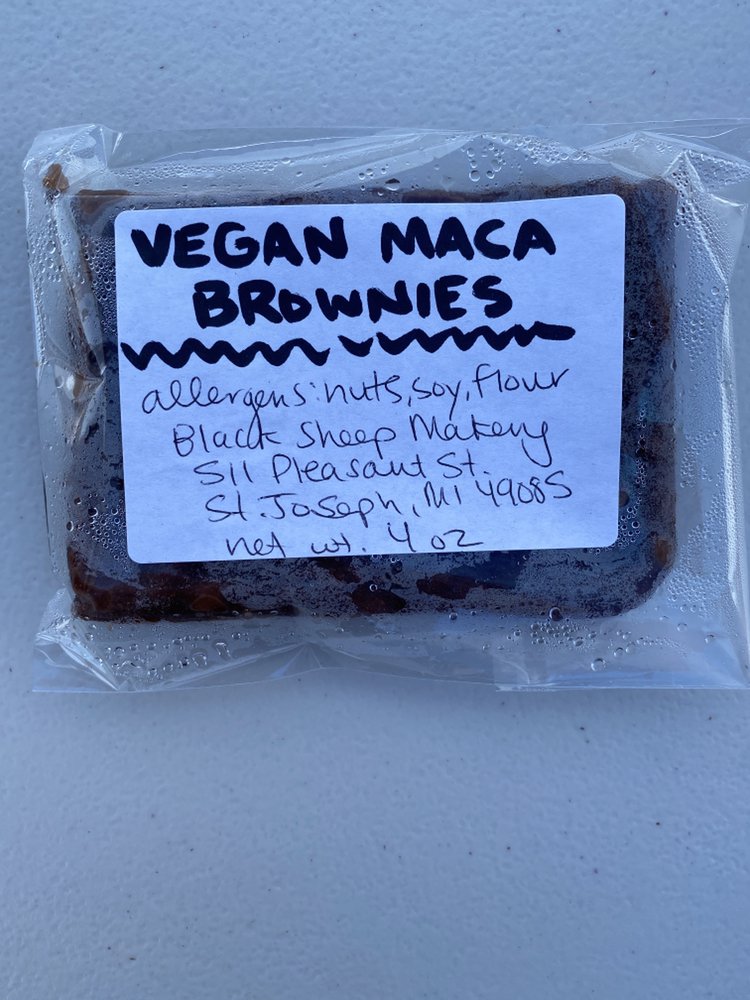
Explore popular things to do in the area, including Handypickup, Beer Church Brewing, and Black Sheep Makery.
| Name | Category | Distance | Reviews |
Ratings by
Yelp
|
|---|---|---|---|---|
| Dining | 0 miles | 0 reviews | 0/5 stars | |
| Dining · $$ | 0.1 miles | 554 reviews | 3.7/5 stars | |
| Dining | 0.12 miles | 0 reviews | 0/5 stars | |
| Dining | 0.16 miles | 10 reviews | 4.4/5 stars | |
| Dining | 0.16 miles | 0 reviews | 0/5 stars | |
| Dining | 0.16 miles | 0 reviews | 0/5 stars | |
| Dining | 0.18 miles | 1 review | 1/5 stars | |
| Dining | 0.19 miles | 0 reviews | 0/5 stars | |
| Dining · $ | 0.19 miles | 8 reviews | 2/5 stars | |
| Shopping | 0.09 miles | 0 reviews | 0/5 stars | |
| Shopping | 0.19 miles | 1 review | 4/5 stars | |
| Active | 0 miles | 0 reviews | 0/5 stars | |
| Active | 0.05 miles | 1 review | 1/5 stars | |
| Active | 0.15 miles | 9 reviews | 5/5 stars | |
| Active | 0.15 miles | 48 reviews | 3.8/5 stars | |
| Active | 0.15 miles | 0 reviews | 0/5 stars | |
| Active | 0.15 miles | 1 review | 1/5 stars | |
| Active | 0.16 miles | 11 reviews | 3.5/5 stars | |
| Active | 0.17 miles | 2 reviews | 5/5 stars | |
| Nightlife | 0.14 miles | 101 reviews | 4.4/5 stars | |
| Beauty | 0.18 miles | 59 reviews | 3.2/5 stars | |
| Beauty | 0.19 miles | 3 reviews | 2.7/5 stars | |
|
|
||||
|
|
||||
|
|
||||
|
|
||||
|
|
||||
|
|
New Buffalo has 758 households, with an average household size of 1.72. Data provided by the U.S. Census Bureau. Here’s what the people living in New Buffalo do for work — and how long it takes them to get there. Data provided by the U.S. Census Bureau. 1,306 people call New Buffalo home. The population density is 529 and the largest age group is Data provided by the U.S. Census Bureau.
Total Population
Population Density Population Density This is the number of people per square mile in a neighborhood.
Median Age
Men vs Women
Population by Age Group
0-9 Years
10-17 Years
18-24 Years
25-64 Years
65-74 Years
75+ Years
Education Level
Total Households
Average Household Size
Average individual Income
Households with Children
With Children:
Without Children:
Marital Status
Blue vs White Collar Workers
Blue Collar:
White Collar:
Don't miss out on the unparalleled expertise and personalized service offered by Chad Gradowski and the ChooseChad Team. Whether you're buying or selling a home, trust the #1 Real Estate Agent in Southwest Michigan to guide you towards success. Contact Chad today to make your real estate goals a reality.